
Poultry Farming
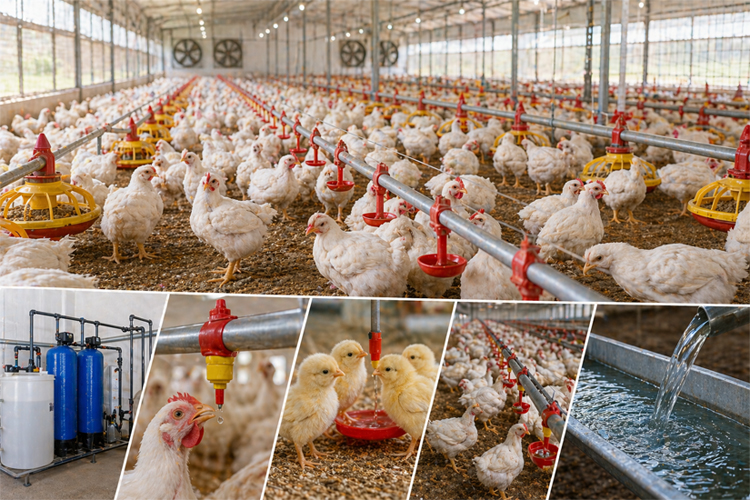
Poultry Farming
Water Quality in Poultry Farming
Water is the most important nutrient for poultry. Birds can survive longer without most nutrients than they can without water. Generally, poultry drink approximately twice the amount of water compared to the feed consumed on a weight basis. During periods of extreme heat stress, water consumption may increase up to four times the normal requirement.
While providing adequate water supply is well understood, the quality of drinking water is often overlooked. Water containing bacteria, minerals, or other pollutants can negatively affect the physiological functions of birds and lead to reduced performance.
Water quality should be evaluated regularly through laboratory analysis. Annual testing of water samples helps identify contamination and allows farmers to take appropriate corrective measures to maintain healthy poultry production.
Important Factors Affecting Water Quality
Color, Taste, and Odor: Drinking water should be clear, colorless, tasteless, and odorless. A reddish-brown color may indicate the presence of iron, while a blue tint may indicate copper. A rotten egg smell indicates hydrogen sulfide contamination.
Bacteria: Microorganisms often originate from organic contamination. The presence of coliform bacteria generally indicates fecal contamination. Ideally, drinking water should contain zero bacterial contamination. Chlorination and filtration are common treatment methods.
pH Level: A pH of 7 indicates neutral water. Water below 7 is acidic and above 7 is alkaline. Low pH water may be corrosive and reduce palatability, while high pH water can indicate excessive minerals such as calcium and magnesium, which may clog watering systems.
Turbidity: Suspended particles such as silt, clay, algae, or organic materials cause turbidity. Levels above 5 ppm may indicate contamination and can lead to clogged water lines.
Total Dissolved Solids (TDS): TDS indicates the concentration of dissolved salts such as calcium, magnesium, and sodium. Excessive TDS levels can negatively affect poultry health and performance.
Hardness: Hard water contains dissolved minerals such as calcium and magnesium. Hardness can lead to scale formation in watering systems and may reduce the effectiveness of medications, disinfectants, and cleaning agents used in poultry farms.
Mineral Contaminants: Nitrates, nitrites, sulfates, sodium, chloride, and iron may contaminate drinking water. High nitrate levels can reduce oxygen transport in the blood, leading to poor growth and coordination. Sulfates and magnesium may cause laxative effects and wet litter conditions.
Magnetic Water in Poultry Farming
Research on magnetized water has shown positive biological effects in poultry. Providing magnetic drinking water for chicks has been observed to improve bone formation and blood morphology.
Experiments indicate that magnetized water can enhance poultry growth and development. Observed benefits include:
• Reduction of chick mortality rates by 2-3 times
• Increase in average body weight by 5-7%
• Improvement in egg-laying productivity by about 10%
• Better meat quality and earlier readiness for market
• Reduction of chick mortality rates by 2-3 times
• Increase in average body weight by 5-7%
• Improvement in egg-laying productivity by about 10%
• Better meat quality and earlier readiness for market
Installation of AQUATREAT
In modern poultry farms, birds are usually raised in enclosed buildings where drinking water is supplied through controlled piping systems. For effective treatment, AQUATREAT magnetic devices should be installed on the water pipeline close to the drinking apparatus.
Typically, a 0.5-inch device installed on the water line can efficiently supply treated water to approximately 20-25 drinking units, with an output capacity of about 1500 liters per hour.