
Magnetic Water Conditioners for ETP Plants
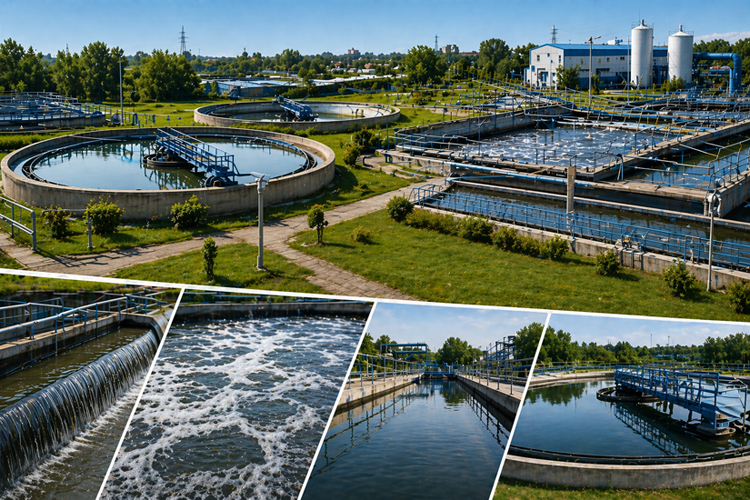
Magnetic Water Treatment for Effluent Treatment Plants
Aquatreat technology can play a valuable role in improving the efficiency and sustainability of Effluent Treatment Plants (ETP), where water containing industrial waste, chemicals, suspended solids, and dissolved contaminants is treated before discharge or reuse. In typical ETP operations, challenges such as scaling, sludge buildup, poor settling of solids, high chemical consumption, and inconsistent water quality often reduce overall treatment efficiency. Aquatreat, based on magnetic water treatment principles, alters the behavior of dissolved minerals and suspended particles, helping enhance multiple stages of the treatment process without additional chemicals or energy input.
When effluent water passes through an Aquatreat device installed on the inlet or recirculation pipeline, the magnetic field influences the interaction between dissolved salts and suspended particles. This improves coagulation and flocculation, allowing fine particles to combine into larger flocs that settle faster in clarifiers and sedimentation tanks. As a result, solid-liquid separation becomes more efficient, producing clearer treated water and reducing the load on downstream filtration systems.
This improved settling process also helps reduce sludge volume and improves dewatering efficiency, lowering sludge handling and disposal costs while improving overall plant performance.
Scaling and fouling are major problems in ETP systems, especially in pipelines, pumps, heat exchangers, and membrane systems used in tertiary treatment processes such as Reverse Osmosis (RO). Dissolved minerals like calcium and magnesium can form hard deposits on equipment surfaces, reducing flow rates and efficiency. Aquatreat helps prevent scale formation by keeping these minerals suspended in a non-adherent form, reducing buildup and gradually loosening existing deposits.
This is particularly beneficial in membrane-based treatment systems, where scaling can reduce membrane life and increase operational costs. By minimizing scaling, Aquatreat helps maintain stable system performance and longer equipment lifespan.
Another key advantage of Aquatreat in ETP operations is the reduction in chemical usage. Conventional treatment plants rely on chemicals such as coagulants, flocculants, anti-scalants, and pH adjusters. With improved particle aggregation and reduced scaling tendencies, the dependency on these chemicals can be significantly reduced, leading to cost savings and reduced environmental impact.
Improved treated water quality also supports water reuse within industrial processes, helping industries move toward Zero Liquid Discharge (ZLD) and sustainable water management practices.
Aquatreat can also support biological treatment processes. In aeration tanks, microorganisms break down organic pollutants. Efficient treatment requires proper oxygen transfer and healthy microbial activity. By improving water properties and reducing mineral deposition, Aquatreat creates a more favorable environment for microbial growth, leading to more effective degradation of organic matter.
From an operational perspective, Aquatreat is easy to install and requires no electricity, chemicals, or ongoing maintenance. It is mounted externally on pipelines without modifying existing infrastructure, making it suitable for both new and existing treatment plants.
Its durable design ensures long-term performance even in harsh industrial environments where effluent characteristics can vary significantly.
In summary, Aquatreat enhances the performance of effluent treatment plants by improving solid-liquid separation, preventing scaling and fouling, reducing chemical consumption, supporting biological treatment efficiency, and enabling better water reuse. It offers an eco-friendly and cost-effective solution for industries aiming to improve treatment efficiency while meeting environmental compliance standards.