
Food Processing Equipment
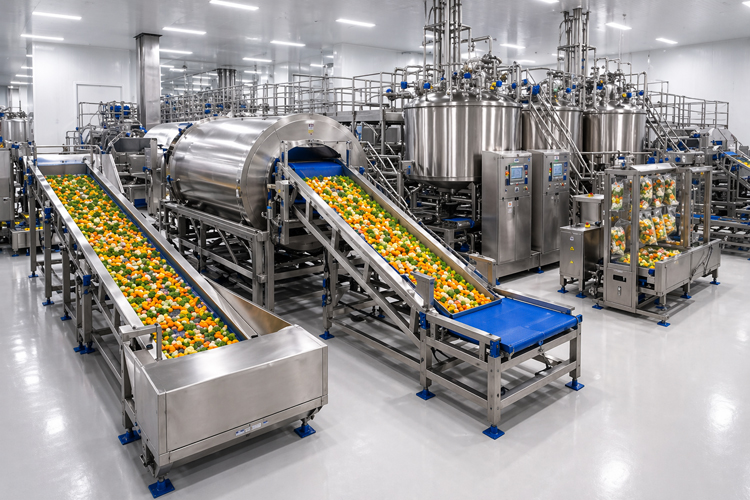
Food Processing Equipment
Aquatreat Magnetic Water Conditioner plays a critical role in enhancing the performance, hygiene, and reliability of food processing equipment where water is a key utility. In industries such as dairy, beverages, packaged foods, meat processing, and bakeries, water is used for cleaning, cooking, cooling, steam generation, and ingredient processing. However, hard water creates persistent challenges like scale formation, mineral deposits, and reduced system efficiency, which can directly impact production quality and operational costs. Aquatreat offers a chemical-free and maintenance-friendly solution by conditioning hardness minerals like calcium and magnesium, preventing them from forming hard, adherent scale on equipment surfaces.
When installed on the main water supply line, Aquatreat alters the crystallization behavior of dissolved minerals, keeping them suspended in a non-sticky form. This prevents scale buildup in critical equipment such as heat exchangers, boilers, pasteurizers, sterilizers, pipelines, spray nozzles, and mixing tanks. Clean heat transfer surfaces ensure efficient heating and cooling processes, which are essential for maintaining precise temperatures in food production. Even a thin layer of scale can reduce heat transfer efficiency significantly, leading to increased energy consumption and inconsistent product quality. By eliminating this issue, Aquatreat helps maintain stable and efficient processing conditions.
In food processing, hygiene and cleanliness are of utmost importance. Aquatreat enhances Clean-in-Place (CIP) systems by improving the effectiveness of cleaning agents and reducing mineral residue on equipment surfaces. This results in better removal of fats, proteins, and contaminants, ensuring higher sanitation standards. Additionally, reduced scaling means fewer bacterial growth sites, contributing to safer and more hygienic processing environments. The reduction in chemical usage for descaling and cleaning also aligns with food safety regulations and sustainability goals.
Aquatreat also improves the efficiency of water-based operations such as washing, rinsing, and ingredient preparation. Conditioned water allows better interaction with detergents and cleaning agents, reducing the quantity required and improving overall cleaning results. In applications like bottle washing, vegetable cleaning, and conveyor washing systems, this leads to improved cleanliness and reduced water spotting or residue.
Another major benefit is the prevention of clogging in spray systems, valves, and pipelines. Food processing plants often rely on precise and continuous water flow for operations. Scale buildup can restrict flow, reduce pressure, and cause uneven distribution, affecting both cleaning and processing. Aquatreat ensures smooth and uninterrupted water flow, minimizing downtime and maintenance interventions.
From an operational standpoint, Aquatreat significantly reduces maintenance costs and equipment downtime. By keeping internal components clean and free from scale, it extends the life of pumps, seals, heating elements, and pipelines. This reduces the frequency of breakdowns, replacements, and production stoppages, which are costly in high-volume food processing environments.
Energy efficiency is another key advantage. Clean heat transfer surfaces in boilers and heat exchangers reduce the energy required for heating processes, leading to noticeable savings in fuel or electricity consumption. This not only lowers operational costs but also contributes to a more sustainable and environmentally friendly operation.
In summary, Aquatreat in food processing equipment provides effective scale prevention, improved hygiene, enhanced cleaning efficiency, reduced chemical usage, better heat transfer, lower energy consumption, minimized maintenance, and extended equipment life. It is an ideal solution for food processing industries aiming to maintain high quality standards while optimizing operational efficiency and sustainability.